
The Art of Being Still
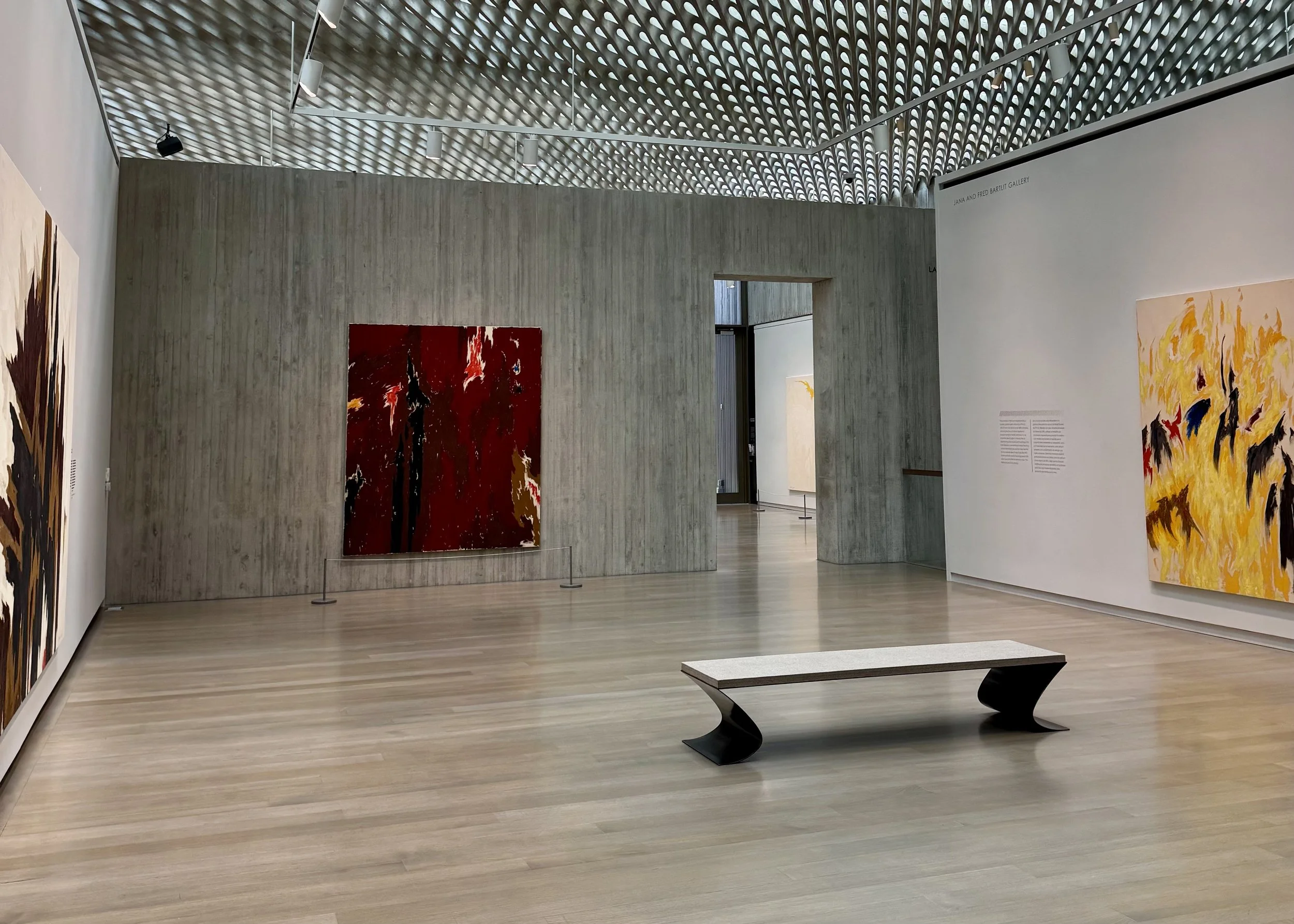
Clyfford Still Museum - Denver, CO
For American artist, Clyfford Still, the art world was an overly controlled institution that commercialized art turning the creative process, and the piece itself, into a commodity. Although he produced a lot of his work on the west coast, mostly Washington state and San Francisco, he spent time in New York in the 1940’s where he would become known as part of the first generation of Abstract Expressionist. He rejected that inclusion despite being in great company with other artists such as Jackson Pollock and Mark Rothko. It wasn’t the people he rejected, but the art establishment.
Still seemed to constantly be painting against the grain, challenging the conventions set by galleries, curators and critics. But it was that friction that led his large-scale, abstract paintings to become the conversation starters that they are. His use of bold colors, shapes and lines was meant to start dialogue. He wanted people to view his art and get lost in the interplay between its fluidity and rigidity, inviting them to develop their own interpretations of each piece. That thought-provoking viewpoint extended beyond the individual canvas, paralleling his desire to keep his entire collection (with the exception of pieces previously commissioned for other museums) together so it could be viewed in its entirety without the “irrelevant” distraction stemming from the comparison to other artists. Decades after his passing in 1980, and in line with stipulations set forth in his will, a search for a city to host the vast majority of his collection began. In 2004, his wife, Patricia Still, chose Denver to receive his world class collection, beating out more than 20 cities. In 2011, the Clyfford Still Museum opened its doors holding an estimated 3,125 pieces representing more than 93% of Still’s lifetime of work.
A few number facts to marinate on, according to the Clyfford Still Museum website.
The collection consists of approximately 830 paintings and more than 2,300 works on paper and sculpture, including:
130 paintings dating from 1920–1943: works from Still’s student years, Depression-era works, Surrealist-inspired works, and first forays into abstraction
302 paintings dating from 1944–1960: Still’s “breakthrough period” and the years of “high” Abstract Expressionism, an era when many canvases span over ten feet
350 paintings dating from 1961–1979: works from the final two decades of his life, created in rural Maryland
2,300 works on paper spanning all aspects of Still’s career in a wide range of media such as pastel, crayon, charcoal, gouache, tempera, graphite, and pen and ink, as well as fine art prints in a variety of techniques
3 carved wood and mixed media sculptures
In addition to the artworks, the Museum is also home to the artist’s archives of letters, sketchbooks, manuscripts, photo albums, and personal effects.
The museum is a reprieve from the expected setting of long, expansive hallways with multi-artist artwork lining each flat surface. Despite the textured walls and ornate ceiling of the museum, a true architectural masterpiece in itself, the bold colors and jagged lines across Still’s canvases created a sense of structure and organized chaos throughout the space. Knowing that all of the art was created by Still helps settle your senses, allowing your eyes to adjust to the spectrum of art without interruption. The hallways have a flow directing you through Still’s story in an organized manner that aids in the absorption and progression of his art. What is not on display is almost as intriguing as what is, leaving much to the imagination about what is stored in the archives. More reason to visit this museum more than once to continue to explore the ever-evolving rotation of art that fills the walls of this iconic institution.
So if you happen to find yourself in Denver (or even if you didn’t plan to visit the Mile High city), make it a point to visit the Clyfford Still Museum. You’ll get a sense of his passion behind the art and the gusto he so boldly expressed to fight against an establishment that wanted to control him (and other artists) while forcing them to paint within the lines.
Learn more about Clyfford Still and the Clyfford Still Museum by visiting the official museum website.